


Connection vs convenience is the tension you feel when your schedule is packed, the day runs on time, and yet sessions occasionally feel thin. Picture a Tuesday where every slot is filled and reminders fire correctly, but you still hear more requests to go deeper because the first minutes felt rushed. This is the lived pressure of connection vs convenience, and it shows up most when systems are working perfectly while presence quietly slips.
Why connection vs convenience keeps showing up
The busy day that still feels off
Intake shifts to a screen and consent becomes a single question. Midway through the session you are already thinking about the next client. The result is a subtle drift away from the human moments that create safety. That is connection vs convenience playing out in real time.
The operational nudge toward speed
Online booking, reminders, templates, and tidy flows reduce friction. They are helpful until they begin to replace the first five minutes that anchor trust. When processes become the driver, connection vs convenience tilts toward convenience and the room feels efficient but emotionally thin.
The costs you notice before the metrics
Rebooks soften and therapists guard their energy. Notes stay accurate yet generic. Clients chase sensation because they did not feel met. These are classic signals of connection vs convenience outpacing care.
Define the real problem so you can fix it
Two priorities that pull against each other
You need predictable flow to run a clinic and you need the conditions that create trust. When tools govern how you relate, throughput replaces presence. This is not a failure of care. It is a design problem that invites clearer boundaries so connection vs convenience does not decide your culture for you.
What clients actually need from you
Clients need to be oriented, believed, and invited into a plan. Those micro moments cannot be automated. A warm greeting, one shared goal, consent that stays alive, and a simple plan statement turn connection vs convenience back toward connection.
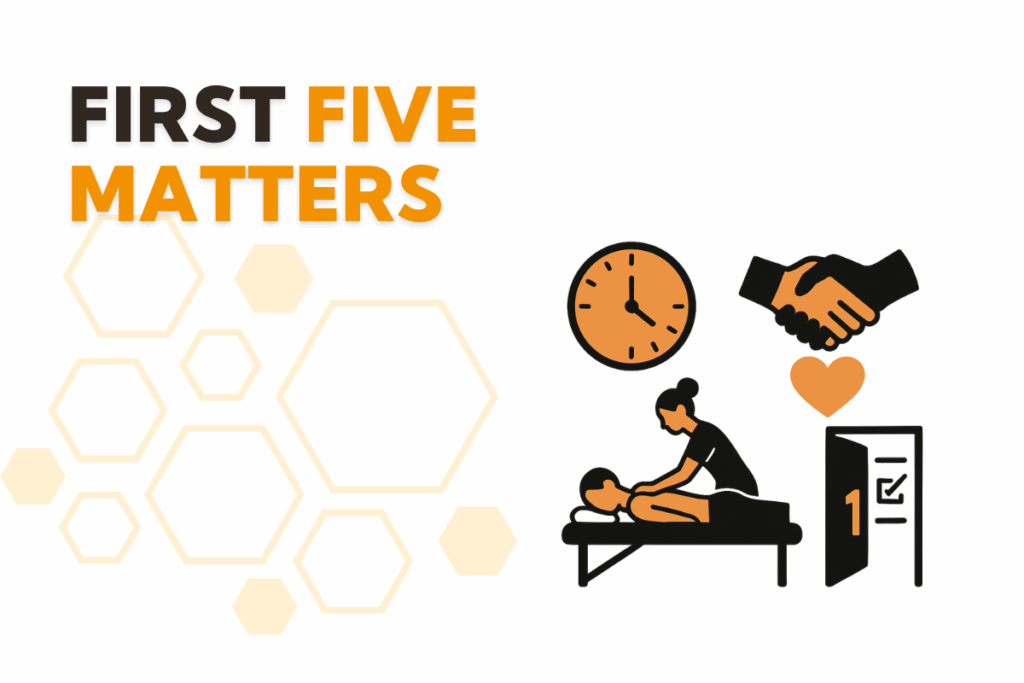
The First Five Framework you can roll out this week
Minute 0 to 1: Warm orientation
Open with a centering question. Ask what would feel like a win today. Offer a focused area or a lighter full-body reset so the session has direction without delay. This is how connection vs convenience stays balanced from the start.
Minute 1 to 3: One goal and clear boundaries
Mirror the client’s words. Name what today includes and what it will not. Set expectations for pressure and pacing in plain language. Clear boundaries prevent the slide toward convenience-only choices.
Minute 3 to 4: Consent in motion
Explain that you will check in when technique or pressure changes and that they can pause or redirect at any time. This keeps consent alive and holds the line against connection vs convenience creeping in during busy moments.
Minute 4 to 5: Plan statement
State the plan in one sentence. Begin with the priority area, note the pace you will use, and confirm a quick pressure check as you go. A clean start allows connection vs convenience to coexist without friction.
In-session habits that keep trust alive without adding time
Five-second check-ins that prevent misfires
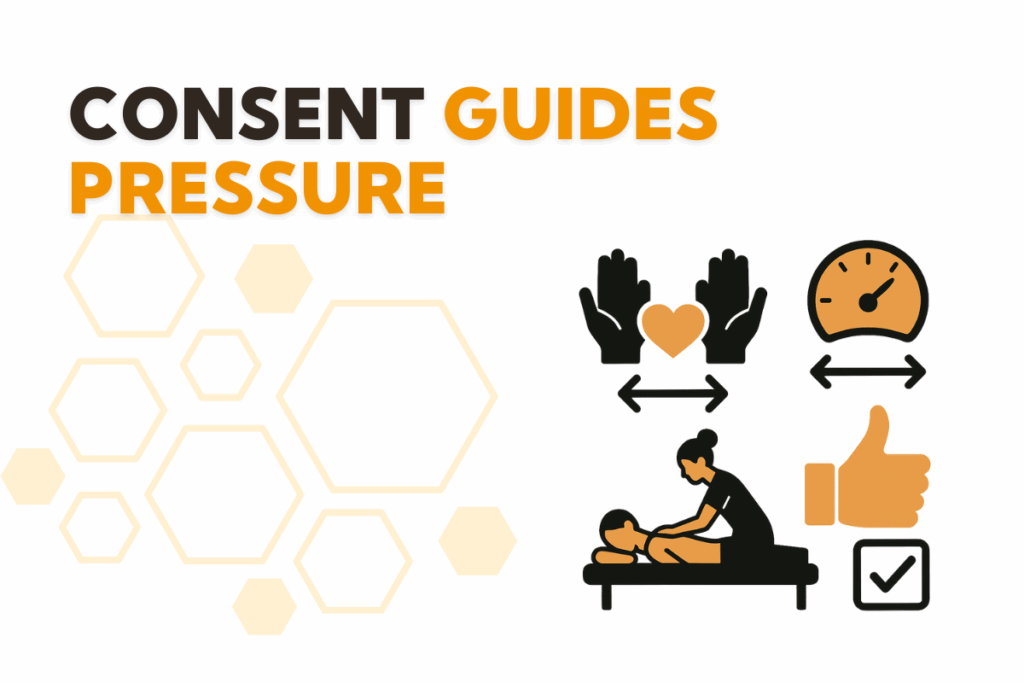
When you change technique or position, ask how the pressure is landing right now. Short questions keep clients involved and reduce mid-session corrections. These micro check-ins are where connection vs convenience stays in balance without slowing you down.
Brief narration when a screen is present
If you must chart in the room, name what you are doing. A simple line that you are noting where they feel pulling so you can track change next visit preserves presence and keeps connection vs convenience from tipping toward the screen.
Close the loop before they leave
Offer one action for home and one suggested next step tied to the goal you set together. Clients leave with clarity and a reasoned path forward, which turns connection vs convenience into a supportive rhythm rather than a conflict.
Fast, human post-session flow
Charting in ninety seconds without losing specificity
Capture the client’s own words, the single goal you worked toward, and one measurable marker for next time. Specific notes make future sessions faster and reduce the drift toward convenience-only decisions.
Reminders that feel personal when cases are messy
Automated reminders lower no-shows, but unique situations still need a person. Keep a visible human lane so trust does not leak when something unusual happens. This is where connection vs convenience requires judgment, not more links.
Rebooking that stays rooted in care
Invite the client to return based on the plan you created together. Suggest timing that supports the change you built today so rebooking feels like care, not sales.
Team agreements that protect connection
Three non-negotiables that anchor culture
The first five minutes belong to the client. Consent is iterative and spoken out loud. Micro resets are scheduled, not stolen. Hold these standards so connection vs convenience cannot erode them during peak weeks.
Two flex points that keep pace
Let convenience dominate where it is safest. Self-serve rescheduling reduces friction and automated intake emails prepare clients before they arrive. Naming these choices keeps connection vs convenience intentional rather than accidental.
Practical steps you can implement tomorrow
Actions for owners and managers
Block a two-minute reset between back-to-backs and treat it as clinical readiness time. Tighten your intake email so more prep happens before arrival and the first five minutes stay protected. Review a small sample of charts for client quotes and clear goal linkage, then coach for specificity in a short huddle. This is how connection vs convenience becomes a design choice instead of a daily struggle.
Actions for therapists
Open each session by mirroring the client’s goal in your words. Use one mid-session check-in during any technique change to confirm comfort and direction. End with a single home action and a suggested next step that matches their goal. These habits keep connection vs convenience balanced without adding minutes.
Real clinic scenarios that show the shift
Late arrival without rushing the room
You greet, acknowledge the time, and co-create a shorter plan that still serves the main goal. The client feels respected rather than squeezed. Your day stays on track and connection vs convenience remains in balance.
The client who always wants more pressure
You slow the first minutes, clarify the win, and introduce a mid-session check-in. The client asks for less intensity because they finally feel met and safe. Connection vs convenience tilts back toward connection.
When an automated loop frustrates a client
A unique situation breaks the self-serve path. A team member takes ownership, confirms the fix, and follows up. The human lane resolves the issue quickly and protects loyalty, which is the antidote to connection vs convenience fatigue.
When you need supportive tools without losing your voice
Technology that serves the first five
If you are tightening systems, choose tools that support presence rather than replace it. electronic charting SOAP notes can keep documentation fast while preserving the client’s language in your plan, and email and text reminders can reduce no-shows while keeping a clear path to a person when needed.
electronic charting SOAP notes: https://hivemanager.io/electronic-charting-soap-notes/
email and text reminders: https://hivemanager.io/email-text-reminders/
What changes when you lead this way
Better days without slowing down
Therapists end the day clearer and less guarded. Clients ask for less intensity because they feel understood. Rebooks connect to goals rather than scripts. Your clinic keeps its pace while protecting what makes care work. This is connection vs convenience handled with intention.
FAQs
Use a condensed First Five. Name one goal, one boundary, one consent line, and one plan statement. You can do this in under a minute and still signal safety. It keeps connection vs convenience from forcing a rushed session.
Short questions prevent guesswork and drifting. They reduce the need for larger changes later and often save time. They are a simple way to keep connection vs convenience balanced.
Coach team members to mirror the client’s exact words in the plan statement. Practice until it sounds conversational. Capture two or three natural phrases they can rely on rather than a long script. This keeps connection vs convenience from sounding mechanical.
Track rebook within fourteen days, note client language about feeling heard in reviews, and ask therapists to rate end-of-day energy on a one to five scale. Review trends over four weeks so you can coach with context and keep connection vs convenience aligned with your values.