

When your massage clinic feels less personal, clients feel it in the first minute. The good news is that warmth can be rebuilt with simple, repeatable habits that make every visit feel human again.
What clients mean when a massage clinic feels less personal
A longtime client is not questioning your hands. They are noticing that eye contact is shorter, messages sound generic, and the first minutes in the room skip listening. When a massage clinic feels less personal, relationships thin, rebooking softens, and trust drifts even if outcomes are still good. The problem is real, but it is fixable.
Where the personal feel is leaking
Discovery and booking alignment
Mixed tone across Google, your site, and your booking page creates uncertainty. If a massage clinic feels less personal, start by aligning voice in those first clicks. A confirmation that references a past goal shows you remember the person, not just the time slot.
Intake and reminder tone
Clients want to feel known. If every reminder reads the same, a massage clinic feels less personal before the visit begins. Add one sentence pulled from last visit’s notes so your message sounds like you, not a template.
Arrival and front desk
A correct name is not enough. When a massage clinic feels less personal, greetings get rushed and details are missed. Opening with one remembered detail, like “How did the calf hold up after Saturday’s run,” resets the mood.
In-room first minutes
The first two minutes set the therapeutic alliance. If a massage clinic feels less personal, bring back one open question, one mirror-back, and one clear plan for today. Partnership beats a checklist.
Checkout and follow-through
Rebooking should reference today’s response and the next step. When a massage clinic feels less personal, this moment feels transactional. One short, specific line restores intention.
The quick reset you can run this week
Front desk reset
Append a single personal line to reminders drawn from chart notes. Greet with the preferred name and one relevant detail. These micro-rituals work even on busy days when a massage clinic feels less personal.
In-room reset
Open with “Catch me up on what changed since last time.” Mirror back in one sentence. Set one goal for the session and close by revisiting it. This arc delivers clarity when a massage clinic feels less personal and clients need to feel seen.
Aftercare reset
Send a short check-in within 24 hours for active cases. Keep it specific, like “How did the calf feel after the run test, 1 to 10.” Rebook with a reason tied to today’s findings so your plan feels personal and steady.
Environment reset
Choose one signature ritual, such as a brief breath cue before you begin or a warm towel finish. Keep lighting consistent, clutter low, and music soft. Small sensory choices matter when a massage clinic feels less personal and clients are searching for safety cues.

Personalization with consent that builds trust
What to include
Personalize goals, comfort preferences, and recent changes. Say it out loud when you chart it so clients know what you keep and why. Transparency is a trust signal when a massage clinic feels less personal and needs to rebuild confidence.
What to avoid
Do not assume sensitive details. Ask for consent before storing preferences like scent, music, or positioning. A simple, respectful ask maintains privacy and keeps the relationship grounded.
Scripts that sound human, not templated
When a regular says the vibe changed
“Thank you for telling me. I do not want you to feel like a slot on the schedule. What is one small thing we used to do that you miss. I will bring it back and add it to your chart now.”
Rebooking with care
“Given how your neck responded today, a 60 minute follow-up in 10 to 14 days makes sense. I will note that we start by re-checking the desk setup.”
Targeted check-in
“How did your calf handle yesterday’s stairs, 1 to 10. I will adjust our plan based on your reply.”
Train the team so personal scales with growth
Write a Voice and Touch Playbook
Document greetings, pivots, boundary language, rebooking invites, and follow-up phrases. New hires can learn tone as well as policy. This protects connection when a massage clinic feels less personal during growth spurts.
Practice the first three minutes
Run short role-plays: one open question, one mirror-back, one today-goal line. Repetition makes curiosity feel effortless, even on a full day.
Protect micro-buffers
Reserve two five minute buffers per shift. Use one to finish notes and one to prep a personal line for the next client. Space creates warmth.
Environment and flow that support care
Set expectations early
Share realistic wait times on arrival and give quick updates if they change. Clear expectations protect perceived fairness when a massage clinic feels less personal and patience is thinner.
Offer simple choices
Provide an easy way to request music off, no scent, a warmer blanket, or extra neck support. Choice increases comfort and helps clients relax into the session.
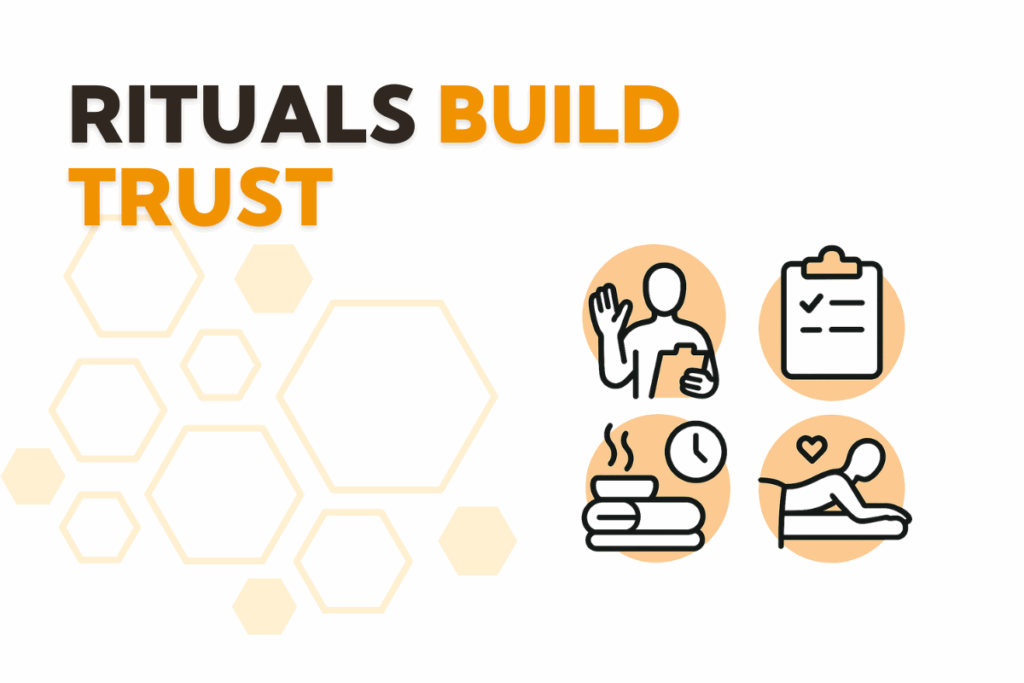
Helpful tools that keep the human in front
Let software hold the memory so your time can hold the person. Saving key details in electronic charting SOAP notes makes it easy to reference next time, and automated email text reminders can carry one personal line from the last visit. Use tools to simplify clicks, then add the human sentence that only you can write.
A trusted resource for communication basics
For a clear overview of patient centered communication principles you can apply today, visit the Agency for Healthcare Research and Quality’s page on patient centered care: https://www.ahrq.gov/topics/patient-centered-care.html
Keep the heart of your clinic visible
You did not lose your personal touch. It got crowded. When a massage clinic feels less personal, bring back two minutes of listening, one personal sentence in your messaging, and one small ritual in every session. Tell your team what “personal” looks like here and protect the time to do it. Clients will feel it, and so will you.
FAQs
Use one remembered detail and one next step. For example, “Let us re check the shoulder after that new desk setup. See you Thursday.” Short and specific feels personal.
Protect small buffers and rotate complex cases. When the day has margins, curiosity returns. Clients experience that curiosity as warmth, which is crucial when a massage clinic feels less personal.
Yes, when they are steady and optional. Keep sound low, lighting consistent, and offer opt outs for music and scent. Choice helps clients feel safe.
Offer a realistic estimate on arrival and a quick update if it shifts. Even small expectation resets protect trust when a massage clinic feels less personal and the day runs long.